Chimney Cleaning in Monroe, NY
What Exterior Chimney Cleaning Involves and Why It Matters
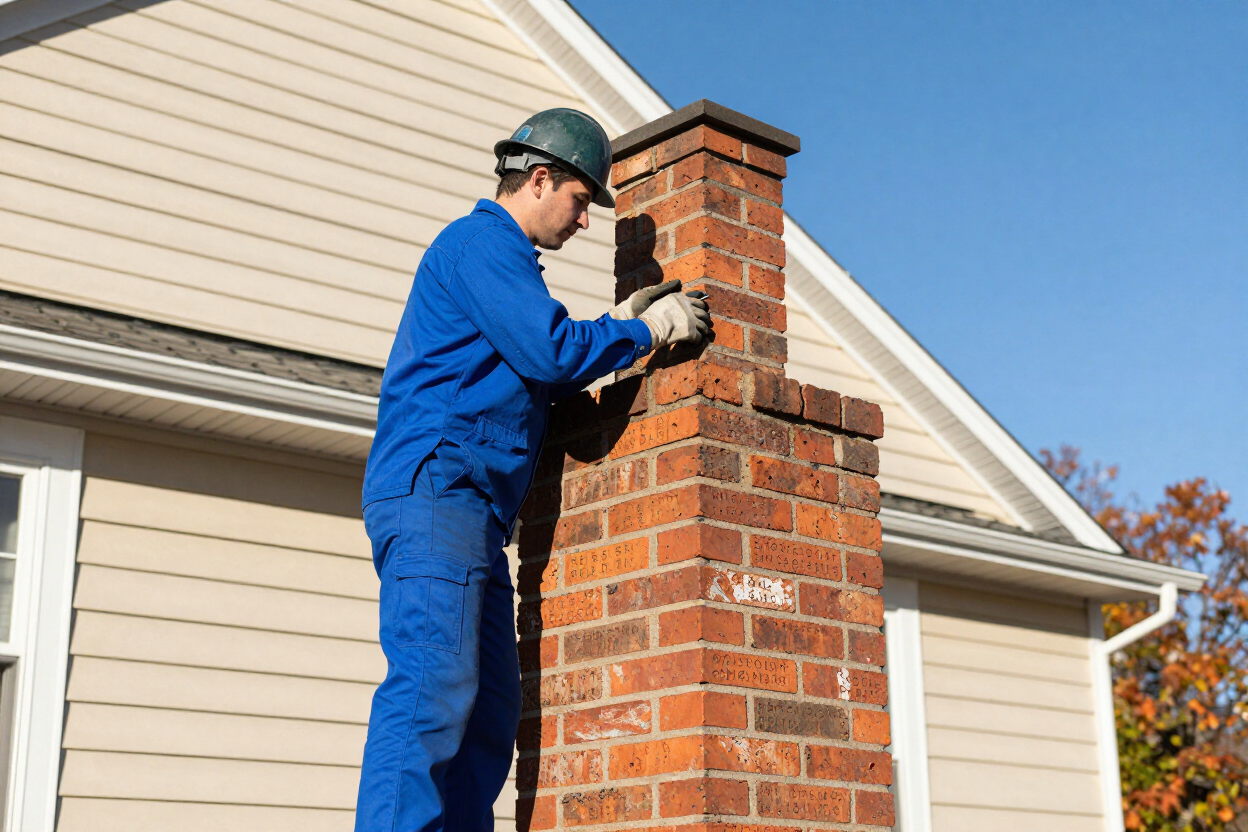
Blanos Soft Wash Power Wash is a licensed exterior cleaning company. Professional exterior chimney cleaning is the removal of moss, algae, lichen, biological staining, and efflorescence from brick, stone, and mortar chimney surfaces. Call us when you see visible green or black biological growth on your chimney masonry, white chalky efflorescence streaking down the chimney face, or dark organic staining that rain hasn't cleared. These aren't cosmetic issues. Moss and algae hold moisture against porous masonry. Efflorescence signals water is already moving through the mortar. Both accelerate deterioration.
The Professional Cleaning Process Protects the Masonry
We use a soft washing approach: a low-pressure application of a biodegradable cleaning solution that breaks down biological growth at the root. Pre-treatment assessment identifies mortar condition and contamination type before any product is applied. Solution dwell time varies by growth density and masonry age. The rinse phase uses controlled low pressure that removes residue without driving water into mortar joints. Post-job inspection confirms the surface is clean and undamaged. A cleaning job performed with incorrect pressure forces water into already porous mortar, accelerating freeze-thaw spalling over the following winter. The cost of that consequence consistently exceeds the cost of hiring a specialist who knows the difference.
Cost and Complexity Depend on These Factors
Chimney height and roof pitch are the primary access variables. Masonry condition matters: deteriorated mortar requires adjusted pressure and solution concentration to avoid forcing more water into existing voids. The number of flues affects the surface area. The presence of a chimney cap affects access. Degree of biological contamination, from light surface algae to deep-set lichen or thick moss growth, drives both solution strength and dwell time. Jobs deferred for multiple seasons typically require more passes. The right way to understand your job's cost is a professional assessment. Request a free quote and we'll tell you exactly what you're dealing with.
What Separates a Specialist from a General Pressure Washer
A quality chimney cleaning provider assesses the masonry condition before selecting any method. We don't apply maximum pressure to every surface regardless of age or porosity. We understand that mortar joints, unlike brick faces, are highly permeable and that water forced into joints at high pressure creates internal damage invisible from street level. We protect surrounding roofing materials and flashing during the cleaning process. We check that no water has been forced behind the cap or flashing before we leave the job. Over 32 years of exterior cleaning experience in Monroe and Bergen County, we've seen what happens when a general pressure washing company handles chimney masonry. It's the fastest way to turn a cleaning cost into a structural repair bill.
Chimney Masonry Requires Low-Pressure Specialist Treatment
Chimney masonry demands a different approach than patios or siding. Brick faces are relatively dense; mortar joints are not. Mortar is permeable by design: it allows minor moisture movement while protecting the structural bond between bricks. High-pressure water aimed at chimney masonry doesn't just clean the surface. It enters the mortar joints, saturates the joint depth, and introduces water behind the surface that was never there before. That trapped moisture runs through freeze-thaw cycles from October through March. Water expands approximately nine percent when it freezes. Mortar joints that absorbed high-pressure water during a cleaning job will spall, crack, and lose structural integrity within one to three winter seasons. The damage is not cosmetic: it is progressive and structural.
Temperatures drop below freezing overnight and rise above it during the day, cycling multiple times per week through the shoulder seasons. For chimney masonry that has been pressure-washed incorrectly, each of these cycles expands and contracts water trapped in the mortar joints. The cumulative damage compounds over a single winter. A chimney that looked presentable after a spring cleaning can show cracked mortar, spalled brick faces, and compromised flashing contact points by the following April. The low-pressure soft washing method we use at Blanos doesn't drive water into the joints. It treats biological growth at the surface without saturating the masonry.
A chimney exterior that has been pressure-washed incorrectly doesn't visibly show the internal damage immediately. The masonry looks clean, and most homeowners have no reason to inspect the mortar joints the following spring. By the time cracked mortar or spalled brick is visible from street level, the structural repair cost is several multiples of what the original cleaning cost. Repointing a full chimney typically runs into thousands of dollars and requires staging or scaffold access. That outcome is avoidable when the right method is used the first time. This is why chimney exterior cleaning is a specialist service and why Blanos Soft Wash Power Wash uses only low-pressure soft washing on masonry surfaces.
Chimney Cleaning Questions Homeowners Ask
Does Chimney Exterior Cleaning Require the Same Soft Wash Method as Siding?
Yes. Chimney masonry, brick, stone, and mortar are highly porous and cannot tolerate high-pressure washing. A soft-wash approach uses low pressure combined with a biodegradable cleaning solution that breaks down moss, algae, and efflorescence at the surface without driving water into the mortar joints. Forced moisture in mortar leads to freeze-thaw spalling over winter.
How Often Should a Chimney Exterior Be Cleaned?
Most homes benefit from exterior chimney cleaning every two to three years. Tree canopy and humidity create ideal conditions for moss and algae growth on masonry. A chimney on a heavily shaded north-facing roofline may need cleaning more frequently than one in full sun.
What Does Efflorescence on a Chimney Mean, and Does Cleaning Fix It?
Efflorescence is the white chalky deposit that appears when water moves through masonry and carries dissolved salts to the surface. Professional soft washing removes the surface deposit. However, recurring efflorescence signals ongoing water infiltration, which may require a separate masonry inspection to identify the source beyond what exterior cleaning alone can address.
Will Chimney Cleaning Damage the Flashing or Cap?
Not when performed correctly. A qualified technician inspects the chimney cap, flashing, and crown condition before cleaning begins and adjusts water direction to avoid saturating flashing seams. High-pressure washing from an unqualified operator is the most common cause of flashing damage during chimney cleaning; low-pressure soft washing eliminates that risk.
Can Moss on a Chimney Cause Structural Damage If Left Untreated?
Yes. Moss holds moisture directly against masonry surfaces and grows root-like structures called rhizoids that penetrate mortar joints. Over time, rhizoid penetration widens mortar gaps and allows more water ingress. Combined with the freeze-thaw cycle, this accelerates mortar deterioration significantly faster than weathering alone would cause.