Monroe, NY, Roof Cleaning That Lasts
Roof Cleaning Protects Your Home From the Inside Out
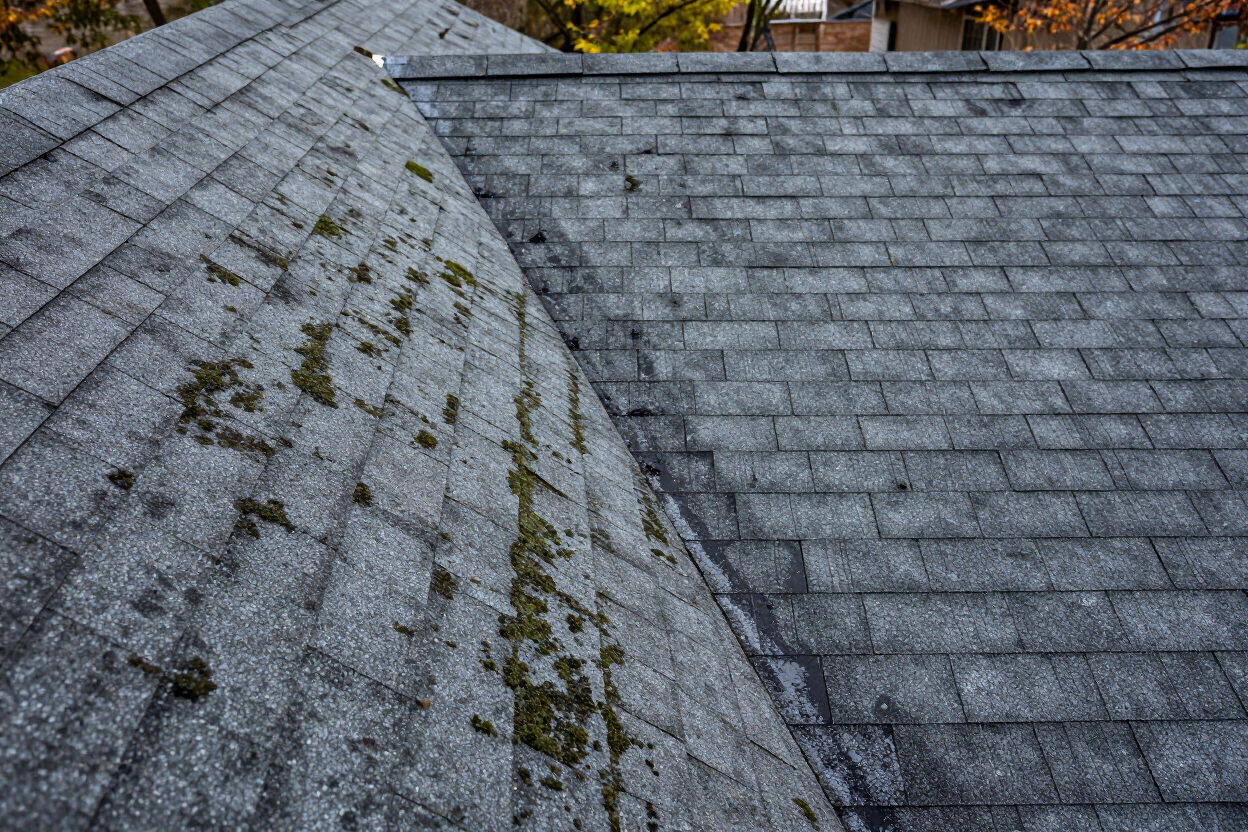
The dark streaks running down your asphalt shingles are not dirt. They are Gloeocapsa Magma, an algae that feeds on the limestone filler manufacturers use to add weight to shingles. Moss and lichen are a separate problem: they hold moisture against the shingle surface and lift the edges, accelerating granule loss and shortening the roof's serviceable life. These are not cosmetic issues. They are structural ones that get worse every season you wait.
We have been cleaning roofs, and the process has not changed at its core: inspect the shingle type and contamination level before touching anything, apply a biodegradable algaecide solution at low pressure, and allow controlled dwell time to kill biological growth at the root rather than surface-washing it off. That dwell time is the step that separates a cleaning that lasts 3 to 4 years from one that shows regrowth in a few months. After the dwell, we rinse gently to remove residue without dislodging granules, then walk the job with the homeowner.
Asphalt shingle manufacturers, including GAF and Owens Corning, explicitly recommend low-pressure soft washing for biological growth removal. High-pressure washing strips granules, which are the UV-blocking layer embedded in the shingle surface. That loss is permanent. The warranty void happens the moment the wrong method is used, not when the damage becomes visible. A qualified soft-wash professional protects both the roof and the warranty. An unqualified one with a pressure washer voids both in under an hour.
Several factors drive the cost and scope of any roof cleaning job. Roof pitch affects safety setup and time on site. Square footage is the primary size driver. Contamination severity matters: light algae staining requires a different solution concentration than thick moss or established lichen. Accessibility adds complexity when dormers, valleys, obstructions, or gutters are involved. Jobs deferred for multiple seasons take more time and more product. No honest provider gives an accurate quote without seeing the roof first. We do not either.
Every Roof Material Requires a Different Cleaning Approach
Asphalt Shingles Need Low-Pressure Soft Washing
Asphalt shingles are the most common roof material in the Monroe area. They are also the most vulnerable to granule loss from high-pressure cleaning. Soft washing with a calibrated algaecide solution kills algae and moss at the root without lifting or dislodging granules. This is the method recommended by every major shingle manufacturer for biological growth removal.
Cedar Shake Roofs Require Controlled Moisture Application
Cedar shake is a natural wood product that splits and delaminates when subjected to concentrated high-pressure water. Cleaning requires a very low-pressure rinse combined with a mildewcide solution formulated for wood. Over-wetting, even at low pressure, accelerates the degradation cycle. A qualified technician controls application time and volume, not just pressure.
Metal Roofs Collect Organic Staining Without Structural Risk
Standing seam and corrugated metal roofs do not suffer the same granule-loss vulnerability as asphalt, but they develop visible organic staining, algae, rust streaks, and atmospheric fallout that softens the roof's appearance and holds moisture against seams and fasteners. Soft washing restores the surface cleanly without the risk of denting from pressure or disturbing sealant at seam overlaps.
Tile Roofs Are Fragile Under Foot and Under Pressure
Clay and concrete tile roofs are durable against weather but crack under foot traffic and high-pressure streams. Walking the wrong section of a tile roof cracks tiles from below, often invisibly, creating leak points that show up months later. Professional roof cleaning on tile uses extension wands to apply solution and rinse from a distance, keeping weight and pressure off the surface entirely.
Roof Cleaning Questions Homeowners Ask
How Long Does Professional Roof Cleaning Take on a Home?
Most single-story homes take 2 to 4 hours from setup to rinse, depending on roof pitch, square footage, and contamination severity. Homes with heavy moss or multi-story rooflines run longer. A free on-site assessment gives a more accurate time estimate before any work begins.
Will Roof Cleaning Damage My Shingles or Void My Warranty?
Soft washing, the low-pressure method we use, does not void shingle warranties. In fact, major shingle manufacturers recommend soft washing specifically because high-pressure washing strips granules and voids warranties. The risk is not in cleaning the roof. It is in choosing a provider who uses the wrong method.
How Often Should I Have My Roof Cleaned?
Most homeowners need roof cleaning every 2 to 4 years, depending on tree coverage, shade exposure, and shingle age. Roofs with heavy shade from mature trees accumulate algae and moss faster and may need attention every 18 to 24 months to prevent buildup from advancing to lichen.
Can Roof Algae and Moss Come Back After Cleaning?
Algae and moss can return, but a professional soft wash treatment kills the growth at the root and significantly slows regrowth compared to surface-only pressure washing. Some cleaning solutions include a residual inhibitor that continues to work after application. The regrowth timeline depends on shade levels, humidity, and the specific products used.Is Roof Cleaning Safe for the Plants and Landscaping Around My Home?
A qualified technician pre-wets surrounding plants and landscaping before applying any cleaning solution and rinses them thoroughly after the job. The biodegradable solutions used in professional soft washing break down quickly and do not persist in soil at harmful concentrations when applied and rinsed correctly. This is a standard pre-job protection step.