
House Washing That Restores Monroe, NY, Homes
House and Siding Washing Protects Your Home from the Outside In
House and siding washing removes built-up dirt, mildew, algae, oxidation, and organic staining from siding, trim, fascia, and soffit. Most homes need washing every one to two years. The visible triggers are hard to miss: dark streaking on siding, green or black patches near the roofline, and a general dullness that even heavy rain never clears up. A home that looks neglected loses curb appeal and, over time, opens the door to moisture intrusion into the siding itself. The longer the problem sits, the worse it gets.
Before we touch a surface, we assess the siding material to determine the right solution concentration and pressure setting. We apply a biodegradable cleaning solution that breaks down biological growth at the root. Then a controlled low-pressure rinse removes residue without forcing water behind panels or into seams. We finish with a walkthrough inspection. The reason solution concentration matters: the wrong mix either fails to kill mold spores at the root, so they return within weeks, or damages the siding finish, so a cleaning job turns into a repair bill.
House washing cost depends on four main variables: exterior square footage, siding material (wood and stucco require more care and adjusted pressure settings than vinyl), degree of contamination and how long it has been accumulating, and site accessibility. We do not list prices here because the right number depends on your specific home. Our free quote is genuine and specific, not a ballpark. You get a real number for your actual property.
A quality provider assesses the surface before applying any chemical or pressure. They select pressure settings and solution concentrations by surface type, not by habit. They protect landscaping and windows during the job. They do not blast every surface at maximum PSI regardless of material. Choosing the wrong provider can force water behind cladding panels, causing mold growth inside the wall cavity. That repair costs multiples of what the cleaning would have cost with a qualified contractor.
DIY pressure washing on siding is the leading cause of water infiltration behind exterior cladding on homes in this region. Water forced behind vinyl or wood siding migrates into the wall assembly, where it feeds mold, degrades insulation, and causes structural rot that is not visible from the exterior until it becomes a major repair. Blanos Soft Wash Power Wash has been performing house and siding washing. We know which surfaces require low-pressure soft washing and which can handle controlled-pressure washing. That distinction is not optional.
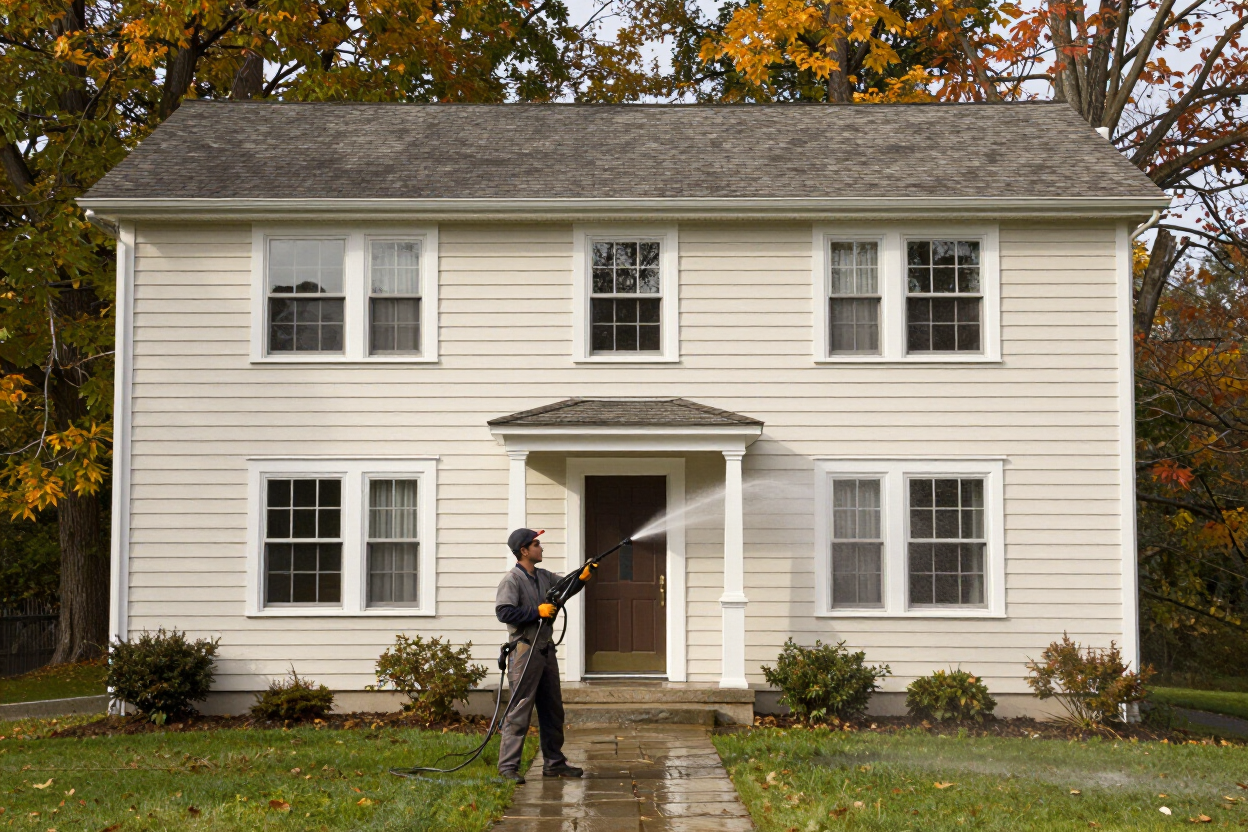
Every Siding Material Demands a Different Cleaning Approach
Applying a single method to every siding material is the most common error in exterior washing. The same pressure setting that cleans a brick wall will crack vinyl panels or splinter painted wood. We assess the material before selecting a pressure setting and solution concentration. That assessment is not optional: it is the difference between a cleaning job and a repair bill.
Vinyl Siding
Low-pressure soft washing is the only safe method. High-pressure water on vinyl cracks panels, breaks seams, and forces water behind the cladding. A biodegradable solution applied at under 100 PSI removes algae, oxidation, and streaking without structural risk.
Aluminum Siding
Aluminum oxidizes and can dent under aggressive pressure. Soft washing at controlled low pressure lifts oxidation and biological staining without deforming the panels. The wrong nozzle selection leaves permanent scoring on older aluminum that no amount of repainting covers cleanly.
Wood Siding
Wood is the most unforgiving surface for pressure washing. Too much pressure splinters fibers, raises grain, and strips paint down to bare wood, turning a cleaning job into a prep-and-repaint project. Soft washing with the correct dilution cleans thoroughly and keeps the wood surface intact.
Stucco
Stucco is porous and fragile at the surface. Pressure washing forces water deep into the substrate, where it expands and contracts with temperature change, eventually cracking the finish. Low-pressure application with a carefully dosed cleaning solution is the only method that cleans stucco without accelerating surface degradation.
Fiber Cement (HardiePlank)
Fiber cement holds up better than wood but still requires controlled pressure. The factory primer and paint finish on fiber cement board can be stripped by aggressive washing, voiding the manufacturer's warranty. A soft-wash approach preserves the finish and keeps the warranty intact.
Brick
Brick appears durable, but mortar joints are vulnerable. Pressure washing at high PSI erodes mortar, admits water, and causes freeze-thaw spalling in winters. Low-pressure washing with an appropriate alkaline solution cleans brick and removes efflorescence without touching the mortar.
Frequently Asked Questions About House Washing
How Often Does a House Need to Be Washed?
Most homes benefit from a full exterior wash every one to two years. Homes surrounded by mature trees, near wetlands, or in shaded lots typically accumulate biological growth faster and may need annual washing. After a wet spring or a summer with heavy rain, a midseason clean is worth considering before growth sets in.
Will Soft Washing Damage My Vinyl Siding or Windows?
Soft washing uses water pressure well below what standard garden hoses produce, combined with a biodegradable cleaning solution. When applied correctly, it cleans siding and trim without cracking panels, forcing water behind cladding, or etching glass. The key is correct dilution; a qualified technician calibrates solution strength to the surface and contamination level before starting.
How Long Does a Full House Washing Take for an Average-Size Home?
A standard two-story colonial or Cape Cod typically takes two to four hours from setup to final rinse, depending on the home's square footage, siding material, and the degree of contamination. Homes with extensive trim detail, multiple levels, or heavy biological growth will take longer. A free on-site quote includes a realistic time estimate.
Can You Wash My House if the Weather Is Cold or the Forecast Calls for Rain?
Light rain shortly after a soft wash does not affect results; the cleaning solution has already done its work during the dwell time before rinsing. Cold temperatures below freezing are a reason to reschedule, as the cleaning solution needs time to activate and wet surfaces can become hazardous.
Does House Washing Remove the Black Streaks on My Siding Near the Roofline?
Yes. Those streaks are almost always algae or mildew growth, accelerated by roof runoff carrying organic material down the siding. Soft washing breaks down the biological growth at the root rather than just masking it, so the surface stays clean longer than it would after a simple high-pressure rinse that removes the visible staining but leaves the spores behind.